

When Should You Consult a Pediatric Surgeon in Mumbai? A Parent’s Guide

“Pediatric surgeon.”
It is probably a phrase no parent ever wants to hear.
The moment your pediatrician says, “I think you should consult a pediatric surgeon,” it can bring a wave of anxiety.
Does my child need surgery? Is something seriously wrong? Have we waited too long? Will my child be okay?
These are completely natural questions.
But there is one important thing every parent should know:
Seeing a pediatric surgeon does not automatically mean that your child needs surgery.
A pediatric surgeon is a specialist who evaluates surgical conditions in babies, children and teenagers. Sometimes, the consultation confirms that surgery is not required. Sometimes, the recommendation is observation or further investigation. And when surgery is necessary, the consultation helps parents understand why it is needed, what the options are and what to expect.
What Does a Pediatric Surgeon Do?
Pediatric surgeons are trained specifically to diagnose and treat surgical conditions in children.
Children are not simply small adults. Their anatomy, physiology, development and response to illness and surgery can be different from those of adults.
A pediatric surgeon may evaluate conditions ranging from relatively common problems such as hernias to complex congenital conditions that may require specialised surgery.
The role of a pediatric surgeon is not simply to perform an operation.
It is to determine:
- Does my child need surgery?
- Is surgery the best option?
- Can we safely observe the condition?
- Are there non-surgical treatments?
- How urgent is the situation?
- What type of surgery, if needed, would be most appropriate?
- What should we expect before, during and after treatment?
When Should You Consult a Pediatric Surgeon?
Your pediatrician may recommend a surgical consultation when your child has a condition that may require specialist evaluation or treatment.
Some common reasons to consult a pediatric surgeon include:
Abdominal and gastrointestinal conditions
- Appendicitis
- Hernias
- Recurrent or unexplained abdominal pain
- Persistent vomiting
- Intestinal obstruction
- Congenital bowel conditions
- Certain constipation or bowel problems where a structural cause is suspected
Urological and genital conditions
- Undescended testis
- Hydrocele
- Certain congenital abnormalities
- Recurrent urinary infections associated with a structural problem
- Conditions affecting the urinary or reproductive system
Conditions present from birth
Some surgical conditions are identified during pregnancy through an antenatal scan. Others become apparent after birth or later in childhood.
These may require anything from observation to planned surgery.
Other surgical conditions
- Pilonidal disease
- Certain lumps and swellings
- Soft-tissue conditions
- Injuries requiring surgical assessment
- Conditions requiring minimally invasive or reconstructive surgery
Does Seeing a Pediatric Surgeon Mean My Child Needs Surgery?
No.
A consultation is an evaluation, not a commitment to surgery.
After examining your child and reviewing the available investigations, the pediatric surgeon may recommend:
Observation
Some conditions can be monitored without immediate treatment.
Further investigations
Sometimes more information is needed before deciding what to do.
Medical treatment
Certain conditions can be managed with medicines or other non-surgical treatment.
Planned surgery
If surgery is the best option, the surgeon will explain why and discuss the appropriate approach.
Emergency surgery
Some conditions, such as complicated appendicitis or intestinal obstruction, may require urgent treatment.
The important thing is that parents should understand why a particular approach is being recommended.
How Do You Choose the Right Pediatric Surgeon?
When your child needs a surgical opinion, it is natural to search for the “best pediatric surgeon.”
You may look at qualifications, experience, hospital affiliations, reviews or recommendations from friends and family.
These can all be useful.
But there is another important question:
Can the surgeon give you clear, factual answers?
A pediatric surgeon who sees children regularly should be able to explain the diagnosis, possible treatment options and expected outcomes in a way parents can understand.
You should feel comfortable asking:
- What exactly is wrong with my child?
- Does my child really need surgery?
- What happens if we wait?
- Are there alternatives?
- How urgent is the procedure?
- What type of surgery would you recommend?
- Why is that approach appropriate for my child?
- How long will my child need to stay in hospital?
- What will recovery look like?
Good surgical care begins with good counselling.
What Are the Different Types of Surgery for Children?
Surgery is not one-size-fits-all.
The approach depends on your child’s age, condition, anatomy, previous surgeries, overall health and the surgeon’s expertise. Broadly, pediatric surgery may be performed using:
- Open Surgery
Open surgery uses an incision that allows the surgeon direct access to the area being treated.
It continues to be an important option for many pediatric procedures, particularly when the condition requires direct access or when minimally invasive surgery is not appropriate.
Open surgery is not “old-fashioned” surgery. The right operation is the one that provides the safest and most effective treatment for the child.
- Laparoscopic Surgery
Laparoscopic surgery is a minimally invasive technique.
Instead of making one larger incision, the surgeon uses a camera and specialised instruments inserted through small openings.
The camera provides a magnified view of the internal anatomy, while the surgeon performs the procedure using specialised instruments.
Depending on the operation, potential advantages can include:
- Smaller incisions
- Less disruption of surrounding tissues
- Less postoperative discomfort in some procedures
- Earlier mobilisation
- Smaller scars
- Faster return to normal activities in selected cases
Laparoscopic surgery is commonly used for several pediatric procedures, including appendectomy, hernia-related procedures and a range of abdominal and urological operations.
However, laparoscopy is not automatically the best choice for every child or every condition.
What Is Robotic Surgery in Children?
Robotic surgery is another form of minimally invasive surgery.
Despite the name, the robot does not operate on the child independently.
The pediatric surgeon remains completely in control of the procedure.
The robotic surgical system translates the surgeon’s hand movements into precise movements of specialised instruments inside the body. It also provides an enhanced, magnified three-dimensional view of the surgical field.
For selected pediatric procedures, robotic surgery can provide advantages such as:
- Enhanced visualisation
- Greater instrument dexterity
- Precise movements in confined anatomical spaces
- Improved ergonomics for the surgeon
- Ability to perform complex minimally invasive reconstruction in selected cases
Robotic surgery can be particularly useful when a procedure requires fine dissection or precise reconstruction in a small or difficult-to-access space.
Laparoscopic vs Robotic Surgery: Which Is Better?
There is no universal answer.
Both laparoscopic and robotic surgery are minimally invasive approaches, and both can be excellent options when used appropriately.
The choice depends on:
- The condition being treated
- The complexity of the surgery
- The child’s anatomy and age
- Previous operations
- The surgeon’s experience
- Available technology
- Expected benefits and risks
For some procedures, conventional laparoscopy may be the most appropriate approach.
For others, robotic surgery may provide advantages because of the precision, dexterity and visualisation it offers.
What Happens If My Child Needs Surgery?
If surgery is recommended, the process should be explained to you step by step.
Before surgery
You may be advised to complete certain investigations and consultations. The surgical team will explain:
- What preparation is required
- Fasting instructions
- Medications
- Anaesthesia
- Admission arrangements
- Expected duration of the procedure
On the day of surgery
The surgical and anaesthesia teams will review your child before the procedure.
The surgeon should explain the planned operation and answer any last-minute questions.
After surgery
Parents should know:
- Where their child will recover after surgery
- When they can start eating and drinking
- How pain will be managed
- When they can get out of bed
- What wound care is required
- How long hospitalisation is expected to be
After discharge
You should receive clear instructions about:
- Medicines
- Diet
- Activity
- Wound care
- Warning signs
- Follow-up appointments
- When your child can return to school and normal activities
Comprehensive counselling is an important part of pediatric surgical care.
Come Prepared With Questions
When you are anxious about your child’s health, it is surprisingly easy to forget what you wanted to ask.
Before your appointment, write your questions down.
About the condition
- What exactly is the diagnosis?
- How serious is it?
- Does my child need treatment now?
- Do we need any additional tests?
About surgery
- Does my child definitely need surgery?
- What happens if we wait?
- Are there alternatives?
- What type of surgery is recommended?
- Why is this approach appropriate?
About laparoscopic or robotic surgery
- Can this procedure be performed laparoscopically?
- Is robotic surgery an option?
- Would robotic surgery provide a meaningful advantage in my child’s case?
- What are the benefits and limitations of each approach?
About hospitalisation
- Will my child need to stay overnight?
- How long is the expected hospital stay?
- Will my child need intensive care?
- When can we expect to go home?
About recovery
- How much pain should we expect?
- When can my child eat normally?
- When can my child return to school?
- When can normal physical activities resume?
- What warning signs should make us contact the doctor?
There is no such thing as asking too many questions when it comes to your child.
When Is a Pediatric Surgical Problem an Emergency?
Some conditions require urgent assessment rather than a routine appointment.
Seek urgent medical attention if your child has:
- Severe or rapidly worsening abdominal pain
- Persistent vomiting, particularly green vomiting
- Significant abdominal swelling
- Blood in vomit or stool
- Sudden severe pain or swelling in the groin or scrotum
- A child who appears extremely unwell or unusually sleepy
- A serious injury
- Symptoms suggesting intestinal obstruction
If you are unsure whether your child’s symptoms require urgent attention, it is safer to have your child assessed promptly.
A Pediatric Surgeon Is Not Someone You Should Be Afraid to Meet
For many parents, meeting a pediatric surgeon feels like a milestone they never wanted to reach.
But a consultation does not mean that an operation is inevitable.
Sometimes, the most reassuring answer is:
“We don’t need to operate.”
Sometimes the answer is:
“Let’s monitor this.”
And sometimes surgery really is the best option.
When that happens, parents should understand why surgery is necessary, what alternatives exist, which surgical approach is appropriate, what the hospitalisation will involve and what recovery will look like.
The right pediatric surgeon is not simply someone who can perform an operation.
It is someone who can help you understand whether your child needs one in the first place.
When it comes to your child, you deserve clear information, honest answers, thoughtful decision-making and comprehensive counselling, before making a surgical decision.
Recent Post
When Should You Consult a Pediatric Surgeon in Mumbai? A Parent’s Guide

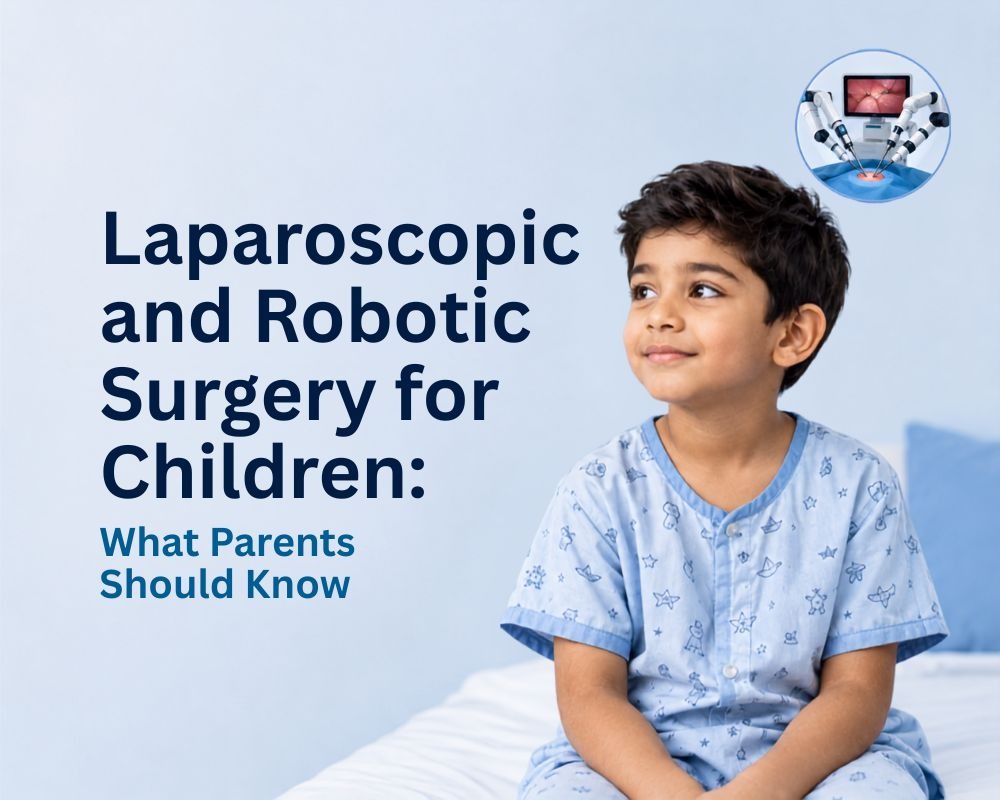
Robotic & Laparoscopic Surgery for Children: What Parents Should Know

Bedwetting Treatment, Bedwetting Clinic & Counselling for Children in Mumbai

Why Might a Newborn Need Surgery in the First Days of Life?