
What Conditions Does a Pediatric Surgeon Treat? A Guide for Mumbai Parents
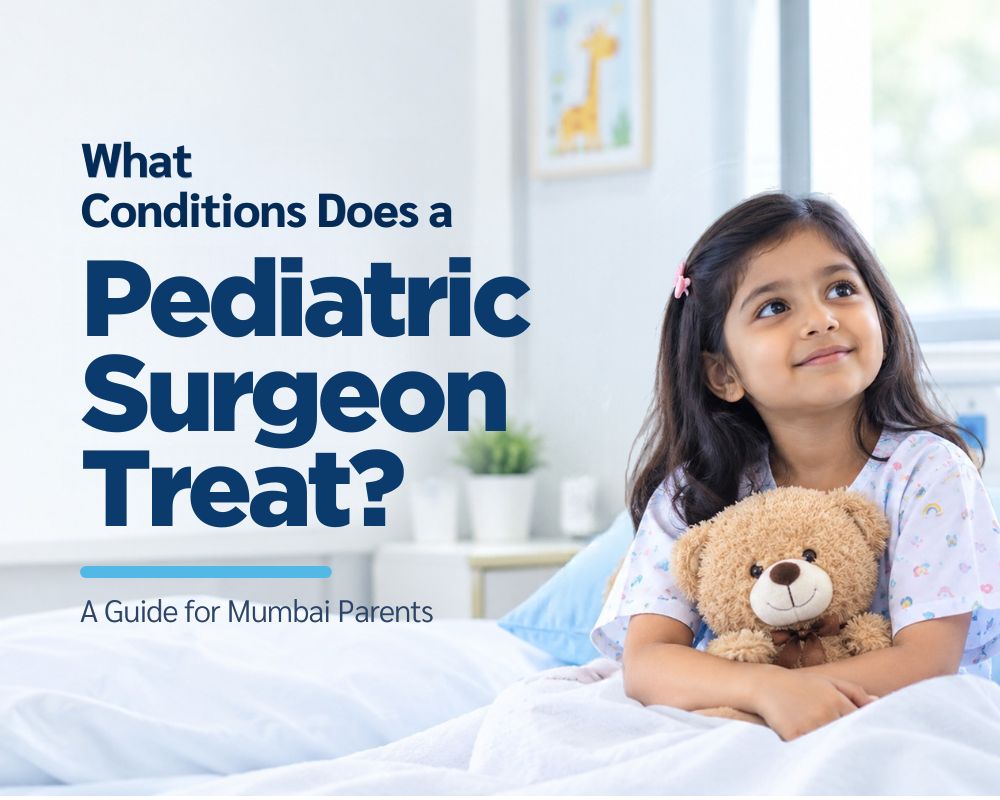
As a parent, discovering that your child may need surgery can be worrying. Whether it is swelling in the groin, persistent abdominal pain, a urinary problem, or a condition identified before birth, knowing which specialist to consult can make the next steps easier.
A pediatric surgeon is a doctor specially trained to diagnose and surgically treat conditions in babies, children, and adolescents. Unlike adult surgery, pediatric surgery requires an understanding of how a child’s body grows and develops, along with the unique medical and emotional needs of young patients.
For parents in Mumbai, understanding what a pediatric surgeon treats can help them recognise warning signs and seek timely medical advice.
What Does a Pediatric Surgeon Do?
A pediatric surgeon treats a wide range of conditions affecting a child’s abdomen, digestive system, urinary and reproductive organs, chest, and other parts of the body. Their expertise also includes surgical conditions in newborns, some of which may be detected during pregnancy.
Not every condition requires surgery. Depending on the diagnosis, a pediatric surgeon may recommend observation, investigations, medication, or a surgical procedure.
Let’s explore some of the common conditions treated by a pediatric surgeon.
What Conditions Does a Pediatric Surgeon Treat?
Hernia and Hydrocele in Children
A swelling in a child’s groin or scrotum can sometimes indicate an inguinal hernia or hydrocele.
An inguinal hernia occurs when tissue, such as a portion of the intestine, protrudes through an opening or weak area in the abdominal wall. Parents may notice a bulge in the groin that becomes more visible when the child cries, coughs, or strains.
A hydrocele is a collection of fluid around the testicle that causes swelling in the scrotum. Some hydroceles resolve naturally, while others may need surgical evaluation.
A pediatric surgeon can determine the cause of the swelling and advise whether observation or surgery is appropriate.
A painful, firm, or discoloured groin swelling, especially when accompanied by vomiting, requires urgent medical assessment.
Hypospadias and Other Urological Conditions
Pediatric surgeons with specialised training in pediatric urology treat several conditions affecting the urinary and reproductive systems.
Hypospadias is a congenital condition in which the opening of the urethra is located on the underside of the penis rather than at its tip. The appearance and severity can vary, and some children may also have a curvature of the penis.
Other conditions may include undescended testes, certain urinary tract abnormalities, and obstructions affecting the flow of urine.
Depending on the condition, treatment may involve monitoring, further investigations, or surgery. The timing of intervention depends on the child’s diagnosis and individual needs.
Undescended Testes
Undescended testes, also known as cryptorchidism, occur when one or both testicles do not move into the scrotum before birth.
This condition is relatively common in newborn boys, particularly those born prematurely. Although some testicles descend naturally during the first few months of life, persistent undescended testes require specialist assessment.
When surgery is recommended, a procedure called orchidopexy, performed using an open or laparoscopic approach when appropriate, brings the testicle into the scrotum.
Early evaluation is important because timely treatment can help reduce potential long-term complications.
Appendicitis and Abdominal Pain in Children
Abdominal pain is common in children and may be caused by constipation, infections, dietary issues, or other conditions. However, some causes require urgent surgical attention.
Appendicitis occurs when the appendix becomes inflamed. The pain may begin around the belly button and move towards the lower right side of the abdomen. Children may also experience fever, nausea, vomiting, or loss of appetite.
Not every child experiences these typical symptoms, particularly younger children.
Persistent or worsening abdominal pain should not be ignored. If appendicitis is suspected, a doctor may recommend an examination, blood tests, and imaging investigations. Treatment may involve surgery, depending on the clinical situation.
Severe abdominal pain, repeated vomiting, unusual drowsiness, or a swollen abdomen warrants urgent medical assessment.
Constipation and Anorectal Conditions
Constipation is common during childhood, but persistent symptoms can sometimes indicate an underlying problem that needs specialist evaluation.
A pediatric surgeon may assess children with severe or treatment-resistant constipation, congenital abnormalities of the anus or rectum, and certain conditions affecting bowel function.
Examples include:
Anorectal malformations: Congenital conditions in which the anus or rectum has not developed normally.
Hirschsprung disease: A condition in which nerve cells are absent from a section of the bowel, making it difficult for stool to pass normally.
Complex bowel conditions: Problems that may require specialised investigations or surgery.
Most childhood constipation does not require surgery. However, constipation associated with persistent abdominal distension, green or bilious vomiting, poor growth, or symptoms present from birth deserves medical evaluation.
Gastrointestinal Conditions Requiring Surgery
The gastrointestinal system includes the stomach, intestines, and other organs involved in digestion. Pediatric surgeons treat several congenital and acquired conditions affecting this system.
These may include:
Intestinal obstruction
Intussusception, in which one part of the intestine slides into another
Certain congenital abnormalities of the intestine
Complicated appendicitis
Selected conditions affecting the stomach, bowel, and abdominal wall
Some of these conditions can develop suddenly and require emergency treatment. Others may be identified during routine examinations or investigations.
Early diagnosis and appropriate treatment can be particularly important in infants and young children, who may not be able to explain their symptoms clearly.
Neonatal Surgery: Surgical Care for Newborns
Some babies are born with conditions that require specialised surgical care soon after birth. This is known as neonatal surgery.
Depending on the diagnosis, these conditions may affect the digestive tract, abdominal wall, diaphragm, urinary system, or other organs.
Examples include:
Esophageal atresia: A condition in which the food pipe does not form a continuous passage to the stomach.
Congenital diaphragmatic hernia: A condition in which an opening in the diaphragm allows abdominal organs to move into the chest.
Intestinal obstructions: Problems that prevent the normal passage of intestinal contents.
Congenital urinary tract abnormalities: Developmental problems affecting the urinary system.
Some of these conditions can be detected during prenatal scans. Antenatal counselling with a pediatric surgeon can help parents understand the diagnosis, anticipated treatment, delivery planning, and care their baby may need after birth.
Not every finding on a prenatal scan requires surgery, and the recommended plan depends on the specific condition.
Gallbladder, Liver, and Biliary Conditions
Children can also develop conditions affecting the liver, gallbladder, and bile ducts.
One important example is biliary atresia, a rare condition in infants in which the bile ducts are blocked or absent, preventing bile from draining normally from the liver.
Parents may notice persistent jaundice, pale or whitish stools, or dark urine. These symptoms in a young infant require prompt medical evaluation.
Other hepatobiliary conditions may require specialist investigations, surgical treatment, or coordinated care with pediatric gastroenterologists and other specialists.
Early assessment is especially important when a liver or bile duct condition is suspected.
Chest and Airway Conditions
Some children have congenital or acquired conditions affecting the chest, lungs, or airway that may require pediatric surgical assessment.
Depending on their specialised training, pediatric surgeons may treat selected congenital chest abnormalities, certain airway conditions, and structural problems involving the thorax.
The symptoms and treatment options vary widely. A child may need observation, imaging, endoscopic assessment, surgery, or care from a multidisciplinary team.
Breathing difficulty, bluish discolouration of the lips, or severe respiratory distress requires emergency medical attention.
What Is Pediatric Laparoscopic Surgery?
Advances in surgical techniques have made minimally invasive procedures an important part of pediatric surgery.
Laparoscopic surgery uses small incisions through which a camera and specialised instruments are inserted. The surgeon views the operative area on a screen while performing the procedure.
Depending on the condition, laparoscopic surgery may be used for procedures such as appendicectomy, hernia-related operations, and selected abdominal or urological surgeries.
Potential benefits may include smaller incisions, less postoperative discomfort, and faster recovery in appropriate cases. However, minimally invasive surgery is not suitable for every child or every condition.
The safest surgical approach depends on the child’s age, diagnosis, overall health, and the surgeon’s assessment.
When Should You Consult a Pediatric Surgeon?
Parents should consider a pediatric surgical consultation when a child has a suspected congenital abnormality, persistent unexplained swelling, a diagnosed condition that may require surgery, or symptoms that suggest a surgical problem.
A consultation may also be useful when a prenatal scan identifies a possible abnormality or when a child needs a second opinion about a recommended procedure.
Warning Signs That Require Urgent Medical Attention
Seek urgent medical attention if your child develops:
Severe or worsening abdominal pain
A painful groin swelling
Green or bilious vomiting
Blood in the stool accompanied by pain or other concerning symptoms
Significant abdominal swelling with vomiting
Breathing difficulty or sudden deterioration
These symptoms can have different causes, but some may indicate a time-sensitive emergency. Do not delay assessment while waiting for a routine appointment.
How to Choose a Pediatric Surgeon in Mumbai
When choosing a pediatric surgeon in Mumbai, parents should consider the doctor’s specialised training, experience with the child’s specific condition, the availability of appropriate pediatric anaesthesia and postoperative care, and access to a suitable hospital or surgical facility.
It is also important to choose a doctor who explains the diagnosis clearly, discusses available treatment options, and helps the family understand the benefits, risks, and expected recovery.
For complex conditions, care may involve pediatricians, neonatologists, pediatric urologists, gastroenterologists, radiologists, and other specialists.
The aim is not simply to treat a surgical condition, but to support the child’s safety, recovery, and long-term well-being.
Consult Dr. Jui Mandke for Pediatric Surgical Care
Dr. Jui Mandke is a Pediatric and Neonatal Surgeon and Pediatric Laparoscopic Surgeon with experience in the surgical management of pediatric hernias and other childhood surgical conditions.
If your child has a persistent swelling, a diagnosed congenital condition, or symptoms that may require surgical evaluation, consulting an appropriately qualified specialist can help you understand the diagnosis and available treatment options.
Timely medical assessment can help parents make informed decisions about their child’s care and determine the next steps based on the child’s individual needs.
Recent Post

Bedwetting in Children: When Is It More Than Just a Habit?
What Conditions Does a Pediatric Surgeon Treat? A Guide for Mumbai Parents

Hernia in Children: Symptoms, Types, Treatment & When Surgery Is Needed
Hypospadias in Children: Causes, Symptoms, Treatment & When Surgery Is Needed
Minimally Invasive Pediatric Surgery: What Parents Should Know