When a child needs surgery, parents naturally want the safest option with the least discomfort and the quickest recovery. Minimally invasive pediatric surgery can offer these advantages in many appropriate cases.
But what exactly does minimally invasive surgery involve, and is it suitable for every child?
What Is Minimally Invasive Pediatric Surgery?
Minimally invasive surgery uses small incisions and specialised instruments instead of a larger traditional incision.
In laparoscopic surgery, the surgeon makes a few small openings and uses a tiny camera to see inside the abdomen. The procedure is performed using specially designed surgical instruments.
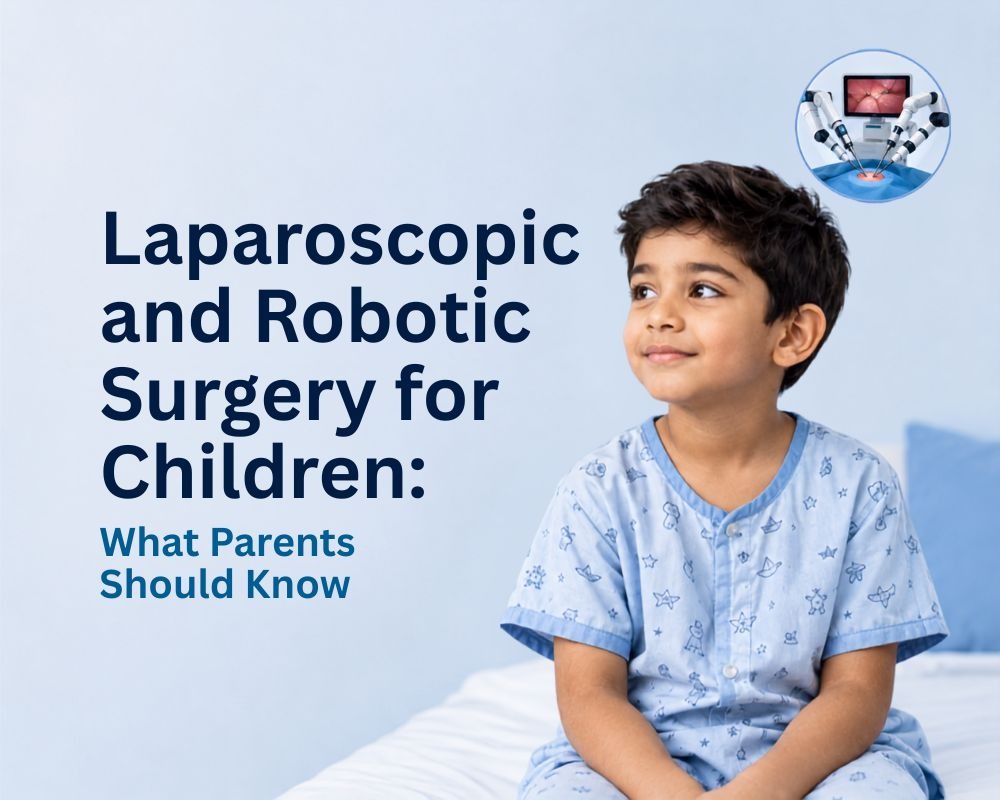
In selected cases, robot-assisted surgery may also be used. The robotic system allows the surgeon to control highly precise instruments while viewing the surgical field in detail.
The important point is that the surgeon remains in control throughout the procedure.
When Is Minimally Invasive Surgery Needed?
Minimally invasive techniques may be considered for a range of pediatric conditions, including:
- Hernia and certain groin conditions
- Appendicitis
- Gallbladder problems
- Undescended testicles
- Some kidney and urinary tract conditions
- Ovarian and other abdominal conditions
- Certain congenital abnormalities
- Selected thoracic conditions
- Some diagnostic procedures and biopsies
Not every child or every condition is suitable for a minimally invasive approach. The decision depends on factors such as the child’s age, diagnosis, anatomy, previous surgeries, and overall health.
What Are the Benefits of Minimally Invasive Pediatric Surgery?
When appropriate, minimally invasive surgery may offer several potential benefits.
Smaller Incisions
Instead of one larger incision, surgery is performed through small openings. This can result in smaller scars compared with conventional open surgery.
Less Postoperative Discomfort
Smaller incisions may mean less pain or discomfort after surgery for many children.
Faster Recovery
Depending on the procedure, children may be able to return to their normal activities sooner.
Shorter Hospital Stay
Some minimally invasive procedures can be performed as day-care or short-stay surgeries, allowing children to return home sooner.
Better Cosmetic Results
Smaller incisions can result in less noticeable scars, which may be an important consideration as children grow.
However, these benefits vary depending on the procedure and the individual child.
Laparoscopic vs. Robotic Surgery
Both laparoscopic and robotic surgery are forms of minimally invasive surgery, but they use different technologies.
What Is Laparoscopic Surgery?
Laparoscopic surgery involves using specialised instruments inserted through small incisions. The surgeon directly controls these instruments while viewing the surgical area through a camera.
What Is Robotic Surgery?
Robotic surgery uses a robotic surgical system controlled by the surgeon. It can provide enhanced visualisation and highly precise instrument movements in selected complex procedures.
Robotic surgery is not automatically better than laparoscopic or open surgery. The appropriate approach depends on the child’s condition, anatomy, the procedure being performed, and the surgeon’s expertise.
Is Minimally Invasive Surgery Safe for Children?
Minimally invasive pediatric surgery has become an important part of modern pediatric surgical care.
However, safety depends on more than the surgical technique itself. Important factors include:
- Appropriate patient selection
- An experienced pediatric surgeon
- Pediatric anesthesia
- Child-specific monitoring
- Appropriate surgical and hospital infrastructure
- Careful postoperative observation
The safest operation is the one that is most appropriate for the individual child.
What Is Recovery Like After Minimally Invasive Surgery?
Recovery depends on the type of surgery, the child’s age, overall health, and the complexity of the procedure.
After surgery, children may experience some soreness, tiredness, or temporary changes in appetite. Pain medicines are usually provided when needed.
For many minimally invasive procedures, children can gradually return to normal eating and activities within a relatively short period.
Your surgeon will provide specific instructions regarding:
- Diet
- Bathing and wound care
- Physical activity
- School or daycare
- Pain medication
- Follow-up appointments
Parents should follow the postoperative instructions provided by the surgical team and contact them if they have concerns about their child’s recovery.
Will My Child Have Scars?
Yes, but minimally invasive surgery generally involves much smaller scars than conventional open surgery.
The location and number of incisions depend on the procedure. Over time, scars usually become less noticeable.
Does Every Child Need Minimally Invasive Surgery?
No.
Minimally invasive surgery is a surgical option, not a requirement.
For some conditions, open surgery may be safer, more effective, or more appropriate. In emergencies or complex cases, the surgeon may also decide that an open approach is necessary.
The objective should not be to use the newest technology simply because it is available. The goal is to achieve the best possible outcome for the child.
What Should Parents Ask the Pediatric Surgeon?
Before your child’s surgery, consider asking the following questions:
- What is the exact diagnosis?
- Does my child need surgery?
- Is minimally invasive surgery appropriate for my child?
- What are the alternatives?
- Why is this particular surgical approach recommended?
- How long is recovery expected to take?
- Will my child need to stay in the hospital?
- What complications should we be aware of?
Understanding the treatment plan can help make the surgical experience less stressful for both parents and children.
The Bottom Line
Minimally invasive pediatric surgery has changed the way many children’s surgical conditions are treated. Smaller incisions, reduced discomfort, faster recovery, and shorter hospital stays can provide important advantages when the technique is appropriate.
However, technology is only one part of the equation.
The right surgery, performed by the right pediatric surgical team, for the right child—that is what matters most.
If your child has been advised to undergo surgery, a pediatric surgeon can help you understand whether laparoscopic, robotic, or conventional surgery is the most appropriate option for your child’s specific condition.
Frequently Asked Questions
Is minimally invasive surgery better than open surgery?
Not always. Minimally invasive surgery can offer advantages in selected cases, but the best approach depends on the child’s condition and individual circumstances.
Is laparoscopic surgery safe for children?
Laparoscopic surgery can be safely performed in appropriately selected children by an experienced pediatric surgical team. The suitability of the procedure depends on the child’s condition and other individual factors.
Does minimally invasive surgery mean faster recovery?
Often, minimally invasive procedures can support a quicker recovery, but recovery varies according to the procedure, the child’s health, and the complexity of the surgery.
Is robotic surgery available for children?
Robotic surgery can be used for selected pediatric procedures. Whether it is appropriate depends on factors such as the diagnosis, anatomy, age, procedure, and available surgical expertise.
Will my child need to stay overnight?
Some minimally invasive procedures can be performed as day-care surgery, while others require hospital observation or an overnight stay. Your pediatric surgeon will advise you based on the procedure and your child’s individual needs.