

Robotic & Laparoscopic Surgery for Children: What Parents Should Know
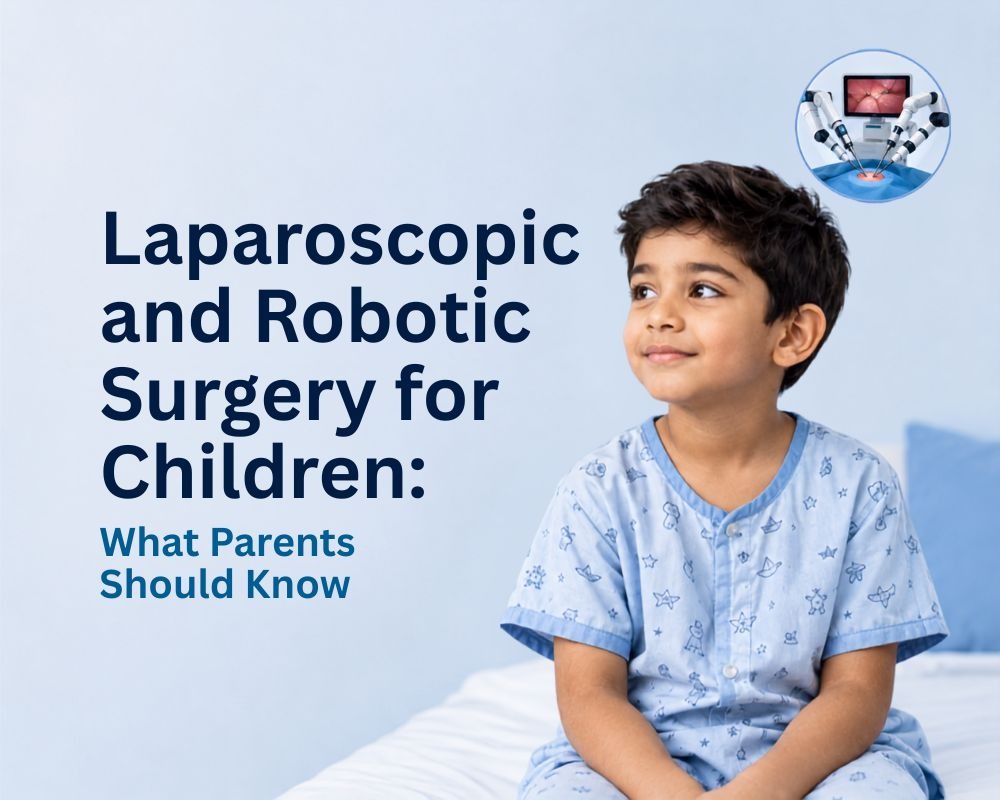
When parents hear the word “surgery,” they often imagine large incisions, prolonged hospital stays, and weeks of recovery. Fortunately, pediatric surgery has evolved dramatically over the last two decades. Today, many conditions that once required large open operations can be treated using laparoscopic (keyhole) surgery or robotic-assisted surgery, allowing children to recover faster, experience less pain, and return to their everyday lives sooner.
As one of the few pediatric surgeons in Mumbai experienced in both advanced laparoscopic and robotic pediatric surgery, Dr. Jui Mandke believes that understanding these technologies helps parents make informed decisions. While both approaches are forms of minimally invasive surgery, robotic surgery represents the next step in surgical innovation, bringing greater precision, enhanced visualization, and new possibilities for treating complex pediatric conditions.
Here’s what every parent should know.
From Cars to Surgery: Understanding the Evolution
Think about how cars have evolved over the years.
A few decades ago, most cars were simple machines. They got you from one place to another, but they required more effort from the driver. Over time, technology introduced power steering, automatic transmission, anti-lock braking systems (ABS), parking sensors, rear-view cameras, cruise control, and lane assistance. Today’s cars are far more advanced, not because they drive themselves, but because they help the driver perform better, more safely, and with greater precision.
Surgery has followed a very similar journey.
Traditional open surgery required large incisions for surgeons to access the organs directly. Then came laparoscopic (keyhole) surgery, which transformed patient care by allowing operations to be performed through tiny incisions using a camera and specialized instruments.
Today, robotic surgery represents the next evolution. The surgeon remains completely in control, but the robotic platform enhances vision, precision, and dexterity, making delicate procedures easier to perform through minimally invasive techniques.
Just as technology has made modern driving safer and more comfortable, robotic technology is helping surgeons perform increasingly complex procedures with remarkable accuracy.
What Is Laparoscopic Surgery?
Laparoscopic surgery, commonly known as keyhole surgery, is performed through tiny incisions, usually just 3–5 mm in children.
A miniature camera is inserted through one incision while delicate surgical instruments are introduced through the others. The surgeon performs the operation while viewing a magnified, high-definition image on a monitor.
Compared with traditional open surgery, laparoscopic surgery offers several advantages:
- Smaller scars
- Less postoperative pain
- Reduced blood loss
- Faster recovery
- Shorter hospital stay
- Earlier return to school and normal activities
For many pediatric conditions, laparoscopic surgery has significantly improved both recovery and cosmetic outcomes.
What Is Robotic Surgery?
Robotic surgery builds upon the principles of laparoscopic surgery while adding another level of precision.
One of the biggest myths is that the robot performs the surgery.
It doesn’t.
Every movement is made by the surgeon sitting at a specialized robotic console. The robotic system faithfully translates the surgeon’s hand movements into highly precise movements of miniature instruments inside the child’s body.
The technology offers several important advantages:
- Three-dimensional high-definition vision
- Magnified surgical view
- Tremor filtration
- Wristed instruments that move with greater flexibility than the human hand
- Exceptional precision during delicate reconstructive procedures
These features are especially valuable when operating in the small anatomical spaces found in infants and children.
Which Pediatric Conditions Can Be Treated Using Robotic or Laparoscopic Surgery?
Many pediatric surgical conditions can now be treated using minimally invasive techniques, including:
- Pyeloplasty for PUJ obstruction
- Ureteric reimplantation
- Choledochal cyst surgery
- Ovarian cysts
- Appendicitis
- Gallbladder disease
- Undescended testes
- Congenital lung malformations
- Diaphragmatic disorders
- Selected intestinal and abdominal procedures
As robotic technology continues to evolve, an increasing number of complex pediatric procedures are being performed robotically, particularly those requiring delicate reconstruction and advanced suturing.
Why Is Robotic Surgery Generating So Much Interest?
Robotic surgery is one of the most exciting advancements in modern pediatric surgery.
By combining the expertise of an experienced pediatric surgeon with advanced technology, robotic surgery offers:
- Greater precision
- Superior three-dimensional visualization
- Enhanced dexterity in confined spaces
- Improved control during delicate reconstruction
- Tiny incisions with excellent cosmetic outcomes
- Faster recovery and earlier return to normal activities for many children
Rather than replacing the surgeon, robotic technology enhances the surgeon’s capabilities, making it possible to perform highly complex procedures through minimally invasive techniques.
Does Robotic Surgery Hurt Less?
Most children undergoing minimally invasive surgery, whether laparoscopic or robotic, experience:
- Less postoperative pain
- Reduced need for pain medication
- Earlier walking and feeding
- Smaller scars
- Faster recovery
- Shorter hospital stays
For families, this often means less stress and a quicker return to normal life.
How Much Does Robotic or Laparoscopic Surgery Cost in Mumbai?
One of the most common questions parents ask is about cost.
The overall expense depends on:
- Your child’s diagnosis
- Complexity of the surgery
- Hospital infrastructure
- Duration of the procedure
- Whether robotic technology is required
As a broad guide, pediatric laparoscopic surgery often ranges between ₹1 lakh and ₹3 lakh, depending on the procedure and hospital. Robotic surgery generally costs more because of the sophisticated robotic platform, specialized instruments, and technology involved.
As robotic platforms become more widely available and competition increases, the cost of robotic surgery is expected to become more affordable in the coming years.
Is Robotic Surgery Covered by Insurance? What Does IRDAI Say?
Robotic surgeries are included by IRDAI under “Modern Treatment Methods and Advancement in Technologies.” IRDAI guidelines specifically list “Robotic surgeries” among the modern treatment procedures that health insurance policies should cover, wherever medically indicated.
Therefore, if a particular surgical procedure is covered under your health insurance policy when performed laparoscopically, the fact that it is performed using a robotic-assisted approach should not, by itself, make the medically necessary surgery ineligible for coverage. However, the actual claim remains subject to the terms, conditions, limits and sub-limits of the individual insurance policy.
Before surgery, patients should confirm the coverage and obtain pre-authorisation from their insurer or TPA, particularly where the policy specifies limits for robotic-assisted procedures.
IRDAI reference: Guidelines on Standardization of Health Insurance Business — Chapter V, Modern Treatment Methods and Advancement in Technologies, which specifically includes Robotic Surgeries.
Looking Ahead: The Future of Pediatric Surgery
If today’s robotic surgery is comparable to a modern smart car, the future may resemble remote driving technology.
Across the world, surgeons have already performed successful remote robotic surgeries, operating on patients located hundreds or even thousands of kilometres away using secure, high-speed communication networks.
Although this technology is currently limited to specialised centres and requires extremely reliable infrastructure, it offers an exciting glimpse into the future.
Imagine a child living in a city without access to a pediatric robotic surgeon being able to receive treatment from an expert hundreds of kilometres away, without the family having to travel long distances.
As robotic technology continues to evolve, we are likely to see:
- Wider availability of robotic pediatric surgery across India
- More pediatric surgeons trained in robotic techniques
- Smaller robotic instruments designed specifically for infants and young children
- Improved affordability as technology becomes more common
- Artificial intelligence assisting with surgical planning and precision
- Greater access to expert care through remote robotic surgery
The future of robotic surgery is not about replacing surgeons with robots. It is about giving experienced surgeons better tools and making advanced pediatric surgical care accessible to more children.
Why Experience Matters
Technology alone does not guarantee excellent outcomes.
The experience, judgment, and expertise of the pediatric surgeon remain the most important factors in any successful operation.
Dr. Jui Mandke has embraced minimally invasive pediatric surgery throughout her career and is among the few pediatric surgeons in Mumbai trained in advanced laparoscopic and robotic pediatric surgery. She carefully evaluates every child to determine the most appropriate surgical approach, ensuring that technology is used whenever it offers a meaningful benefit to the child.
Her focus is simple to provide safer surgery, smaller scars, quicker recovery, and the best possible long-term outcomes.
Robotic & Laparoscopic Pediatric Surgery in Mumbai
Parents searching for robotic surgery for children in Mumbai or laparoscopic pediatric surgery in Mumbai often have questions about safety, recovery, and whether their child is a suitable candidate.
Every child is unique. During consultation, Dr. Jui Mandke performs a comprehensive evaluation to determine whether minimally invasive surgery is appropriate and discusses every available treatment option with the family. This ensures parents feel informed, reassured, and confident before moving forward with surgery.
Frequently Asked Questions
Is robotic surgery safe for children?
Yes. When performed by an experienced pediatric surgeon, robotic surgery is safe and offers excellent outcomes for many complex pediatric procedures.
Will my child recover faster after minimally invasive surgery?
Most children experience less pain, smaller scars, shorter hospital stays, and a quicker return to normal activities compared with traditional open surgery.
Is every child suitable for robotic surgery?
Not necessarily. The most appropriate surgical approach depends on your child’s diagnosis, age, anatomy, and the complexity of the procedure. A consultation with an experienced pediatric surgeon will help determine the best option.
How do I know which surgery is right for my child?
Your pediatric surgeon will recommend the approach that offers the safest procedure, the best functional outcome, and the quickest recovery based on your child’s individual condition.
Book a Consultation for Robotic & Laparoscopic Surgery in Mumbai
If your child has been advised to undergo surgery, understanding your options can make all the difference.
Dr. Jui Mandke offers advanced laparoscopic and robotic pediatric surgery in Mumbai for children with congenital anomalies, pediatric urological conditions, gastrointestinal disorders, thoracic conditions, and other surgical problems. Every treatment plan is personalized to ensure your child receives the most appropriate surgical care with the goal of achieving the best possible outcome.
Final Thoughts
The evolution from open surgery to laparoscopic surgery and now robotic-assisted surgery mirrors the progress we’ve seen in many areas of modern life. Each advancement has been designed not to replace human expertise but to enhance it.
Robotic surgery is opening new possibilities in pediatric healthcare by enabling experienced surgeons to perform increasingly complex procedures with exceptional precision. As the technology continues to evolve, it promises to make minimally invasive surgery even safer, more precise, and more widely accessible, helping more children recover faster and get back to doing what they do best: being children.
Recent Post
Minimally Invasive Pediatric Surgery: What Parents Should Know

When Should You Consult a Pediatric Urology Surgeon for Your Child?

Understanding Hernia Surgery Costs in Mumbai & India: Expert Advice

When Should You Consult a Pediatric Surgeon in Mumbai? A Parent’s Guide