As parents, few things are as unsettling as hearing that something may be wrong with your baby before they are even born. Antenatal scans are meant to provide reassurance and joy, but sometimes they raise unexpected questions that lead families into difficult territory.
When parents hear that an antenatal scan has detected an abnormality in their baby, questions begin immediately:
Is my baby okay? Will surgery be needed? Should we wait?
For families facing a diagnosis of Bronchopulmonary Sequestration (BPS), these questions can become especially difficult because many babies appear completely healthy after birth.
As a Pediatric Surgeon in Mumbai, Dr. Jui Mandke frequently counsels families through these complex decisions, helping them understand not only the diagnosis itself, but also the implications of treatment versus observation.
Zoe’s Story: Diagnosed Before Birth
Zoe’s journey began before she was born.
During a routine antenatal scan, doctors detected a mass in the left side of her chest. Naturally, this finding created anxiety and uncertainty for her family.
What exactly was it? Would it affect her birth? Would surgery be needed immediately?
Fortunately, Zoe had no complications after birth. She breathed well, fed normally, and continued to grow appropriately. During the first six months of life, she remained completely symptom-free.
And that is where the real dilemma began.
If a child appears perfectly healthy, should surgery still be performed?
What Is Bronchopulmonary Sequestration (BPS)?
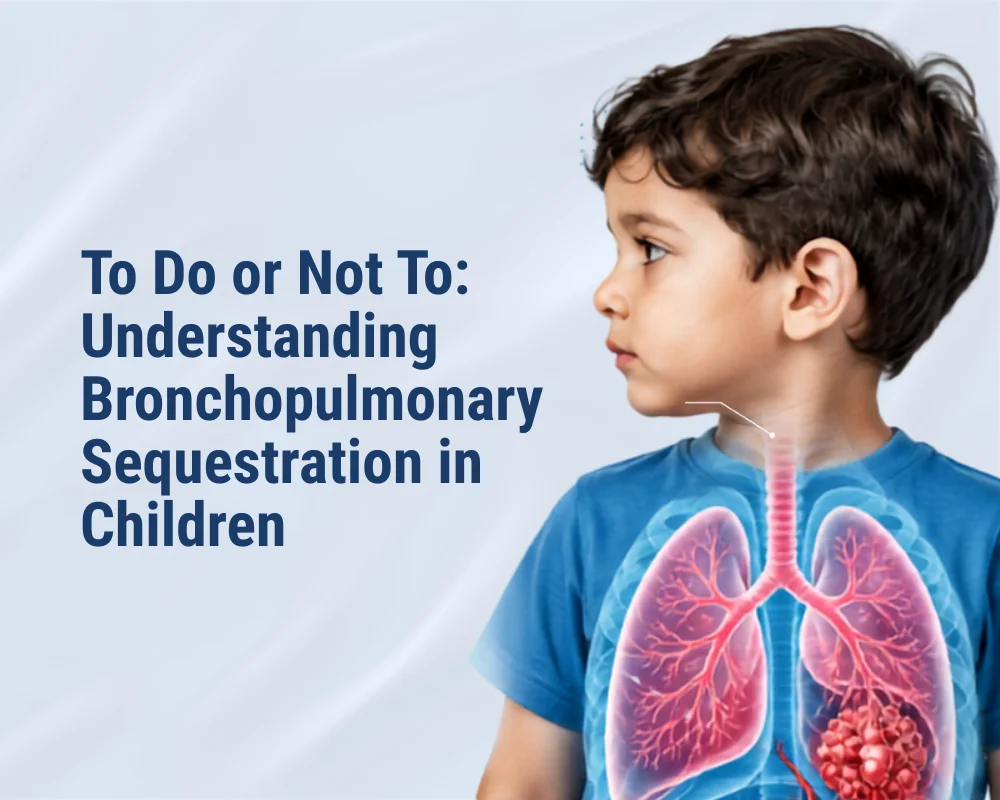
Bronchopulmonary Sequestration (BPS) is a rare congenital lung condition in children where a portion of abnormal lung tissue develops separately from normal lung tissue.
Unlike normal lung tissue, this abnormal segment receives blood supply from the body’s main artery instead of the normal lung circulation.
Many cases of BPS are detected during antenatal or pregnancy scans, allowing doctors and families to plan monitoring and future treatment options.
Why Treatment May Be Recommended Even Without Symptoms
Many children with Bronchopulmonary Sequestration initially have no symptoms. However, the question is not always about how the child is doing today, it is also about what may happen in the future.
If left untreated, this abnormal tissue may potentially lead to:
- Recurrent chest infections
- Breathing difficulties
- Bleeding complications due to abnormal blood vessels
- Progressive lung-related problems
- Increased complexity if intervention is delayed
The challenge is that a symptom-free child can understandably make parents question whether intervention is necessary.
Counselling Parents: Understanding the Pros and Cons
One of the most important aspects of pediatric surgical care is counselling.
Families need time, explanations, and space to ask questions. The discussion should include:
- Benefits of surgery
- Risks associated with surgery
- Advantages of observation and monitoring
- Need for regular follow-ups and imaging
- Possible consequences of not operating
The goal is not simply to recommend surgery or avoid it.
The goal is to help families make an informed decision based on the child’s present condition and future risks.
Robotic Pediatric Surgery: Zoe’s Treatment Journey
After detailed discussions and understanding all available options, Zoe’s family decided to proceed with treatment.
She underwent robot-assisted thoracoscopic excision at Nanavati Max Hospital, performed using a minimally invasive approach.
Robotic pediatric surgery offers several advantages:
- Smaller incisions
- Greater surgical precision
- Faster recovery
- Reduced postoperative discomfort
- Minimal visible scarring
The procedure was successful, and Zoe recovered well.
Dr. Jui Mandke: Helping Families Make Informed Decisions
Cases like Zoe’s remind us that medicine often does not deal in simple “yes” or “no” answers.
Sometimes the most difficult question is not:
“Can we operate?”
but
“Should we operate?”
The dilemma of “To do or not to do” will always remain in pediatric surgery. However, that decision should never be based on fear, pressure, or assumptions. It should be an informed choice that considers the child’s age, present health, and the possible consequences of not acting.
As a Pediatric Surgeon in Mumbai, Dr. Jui Mandke believes that every family deserves honest discussions, detailed counselling, and individualized care.
Because sometimes choosing not to intervene is also a decision, and every decision deserves understanding.
Looking for consultation regarding congenital conditions, pediatric thoracic surgery, or minimally invasive surgery for children? Connect with Dr. Jui Mandke for expert guidance and care.