
Appendicitis in Children: Early Symptoms, Diagnosis & Treatment
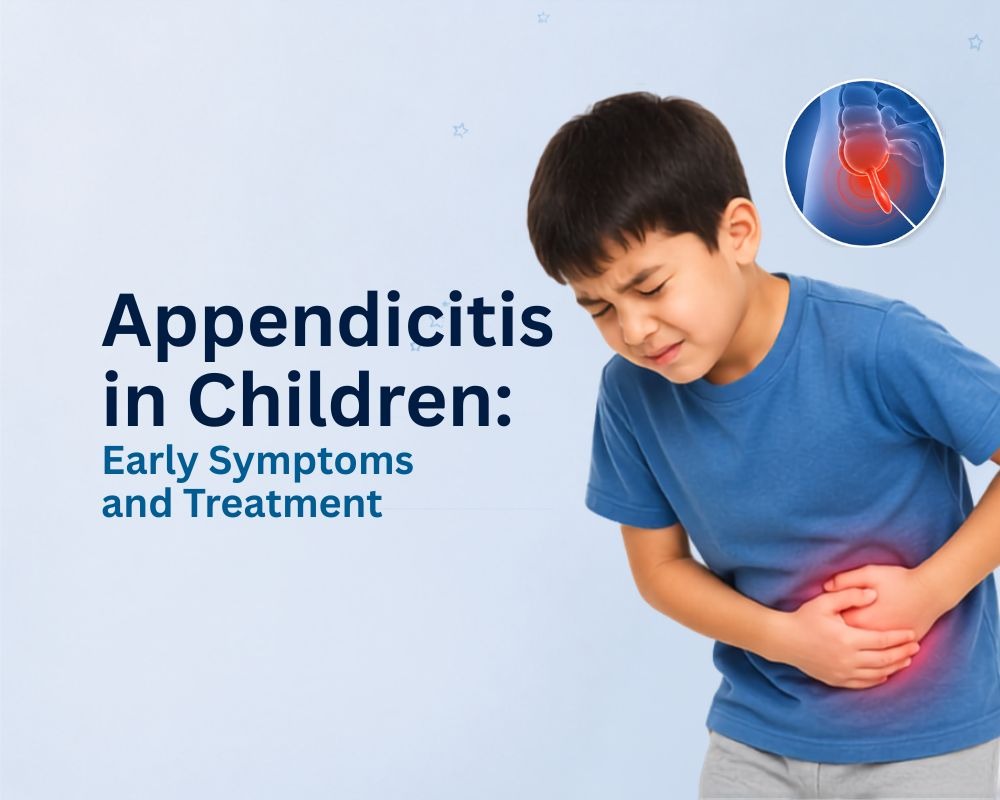
Appendicitis is one of the more common causes of emergency abdominal surgery in children. It happens when the appendix becomes inflamed and infected. Although appendicitis can occur at any age, it is more common in school-aged children and adolescents.
Appendicitis usually occurs when the opening of the appendix becomes blocked, causing inflammation and allowing bacteria to multiply inside it. In children, the blockage may be caused by hardened stool (faecalith), swelling of lymphoid tissue in the intestinal wall, or, less commonly, a foreign body or intestinal parasite. Sometimes, however, the exact cause cannot be identified.
A common misconception is that appendicitis is caused by eating a particular food or by something a child or parent has done. In most cases, there is no clear way to predict or prevent appendicitis. Once the appendix becomes blocked and inflamed, the condition can progress quickly, which is why persistent or worsening abdominal pain should be evaluated promptly.
For parents, the difficult part is that appendicitis may initially look like an ordinary stomach ache, stomach infection, or food poisoning. Recognising the warning signs early and getting your child evaluated can help prevent complications such as a perforated or “burst” appendix.
What Is Appendicitis?
The appendix is a small, tube-like structure attached to the large intestine. When its opening becomes blocked, the appendix can become swollen and inflamed. If the infection progresses without treatment, the appendix can perforate, allowing infection to spread inside the abdomen.
Appendicitis requires prompt medical assessment. It is not something parents should try to diagnose or treat at home.
What Are the Early Symptoms of Appendicitis in Children?
Appendicitis does not always present in the same way in every child. However, there are some symptoms parents should watch for.
Abdominal pain
Pain is often the first noticeable symptom.
It may initially begin around the belly button and later move towards the lower right side of the abdomen. The pain may become progressively stronger and can worsen when the child walks, coughs or moves.
Younger children may not be able to describe exactly where they hurt. Instead, they may become unusually irritable, refuse to move or simply say that their tummy hurts.
Loss of appetite
A child who normally enjoys eating may suddenly refuse food. Some children with appendicitis may not even want their favourite foods.
Loss of appetite along with persistent abdominal pain is worth paying attention to.
Nausea and vomiting
Nausea and vomiting are common symptoms of appendicitis. They may occur along with abdominal pain and loss of appetite.
However, vomiting by itself does not mean that a child has appendicitis. It is the combination of symptoms and their progression that matters.
Fever
A child may develop a fever as inflammation and infection progress.
Diarrhoea or changes in bowel movements
Some children with appendicitis may have diarrhoea, which can make the condition look like gastroenteritis or a stomach infection.
This is one reason appendicitis can sometimes be difficult to recognise in children.
How Can Parents Tell If It May Be Appendicitis?
There is no single symptom that confirms appendicitis.
A combination such as:
Persistent abdominal pain + loss of appetite + vomiting/nausea + fever
should prompt medical evaluation, particularly if the pain is becoming more severe or moving towards the lower right side of the abdomen.
A child with suspected appendicitis may also prefer to lie still because movement makes the pain worse.
If your child’s abdominal pain is severe, persistent or worsening, seek urgent medical attention rather than waiting for the symptoms to settle.
Why Is Early Diagnosis Important?
One of the major concerns with appendicitis is perforation, commonly described as a burst appendix.
If an inflamed appendix is left untreated, it can perforate and release infected material into the abdomen. This can lead to a more serious abdominal infection and may require a longer hospital stay and additional treatment.
Early diagnosis can therefore make treatment simpler and recovery smoother.
How Is Appendicitis Diagnosed in Children?
A pediatric surgeon will usually begin with a detailed history and physical examination.
Depending on your child’s symptoms and examination findings, investigations may include:
- Blood tests to look for signs of infection
- Ultrasound of the abdomen
- MRI or CT in selected cases
- Additional tests when the diagnosis is uncertain
The choice of investigation depends on the child’s age, symptoms and clinical findings.
Importantly, not every child with abdominal pain needs a CT scan. The doctor will determine which investigation is appropriate.
How Is Appendicitis Treated in Children?
Once appendicitis is diagnosed, treatment depends on whether the appendix is inflamed but intact or has already perforated.
Appendectomy
The definitive treatment for many children with acute appendicitis is appendectomy, the surgical removal of the appendix. Antibiotics and intravenous fluids are commonly given as part of the initial treatment.
Laparoscopic Appendectomy
In many children, the appendix can be removed using laparoscopic surgery.
Instead of making one larger abdominal incision, the surgeon uses a camera and specialised instruments through small incisions. Laparoscopic appendectomy is commonly used in children and can offer the advantages associated with minimally invasive surgery, including smaller incisions.
The most appropriate surgical approach depends on the child’s condition and the surgeon’s assessment.
What If the Appendix Has Already Burst?
A perforated appendix is more complicated than uncomplicated appendicitis.
Children may require:
- Intravenous antibiotics
- Fluids and supportive treatment
- Surgery in appropriate cases
- Drainage of an abdominal abscess when necessary
- A longer period of hospital observation and treatment
The treatment plan depends on the extent of infection and whether an abscess or other complication has developed. Usually a laparoscopic appendicectomy is advised in a complicated appendicitis.
In selected children with perforated appendicitis and an abscess, doctors may initially control the infection with antibiotics and/or drainage before considering an interval appendectomy. The decision is individualised for each child.
How Long Does a Child Take to Recover After Appendectomy?
Recovery depends on whether the appendix was perforated ( complicated appendicitis ).
Children with uncomplicated appendicitis can often start eating and drinking relatively soon after surgery and may be discharged the following day, depending on their recovery.
Children with a perforated appendix may need to remain in hospital longer for antibiotics, monitoring and treatment of the infection.
Most children eventually return to their normal activities after recovering from appendectomy
Can a Child Live Normally Without an Appendix?
Yes.
The appendix is not considered a vital organ, and children can grow and live normally after an appendectomy.
When Should Parents Seek Urgent Medical Attention?
Seek urgent medical evaluation if your child has:
- Severe or worsening abdominal pain
- Persistent pain, particularly on the lower right side
- Abdominal pain accompanied by vomiting and fever
- Refusal to eat or drink
- Increasing pain when walking, coughing or moving
- Significant abdominal swelling
- A child who appears unusually unwell or is reluctant to move
Appendicitis is an urgent condition, and suspected appendicitis should be assessed promptly.
Appendicitis in Young Children
Appendicitis can be particularly difficult to recognise in toddlers and younger children because they may not be able to clearly describe their symptoms. Appendicitis is uncommon in very young children, but when it does occur, diagnosis can be challenging.
Parents should pay attention to unusual behaviour such as persistent crying, refusing food, vomiting, fever or avoiding movement when these symptoms occur together.
Frequently Asked Questions About Appendicitis in Children
Is appendicitis common in children?
Yes. Appendicitis is an important cause of emergency abdominal surgery in children and occurs more frequently in school-aged children and adolescents.
Can appendicitis be treated without surgery?
In selected cases of uncomplicated appendicitis, antibiotic treatment without immediate surgery may be considered. However, treatment needs to be carefully selected and monitored by the treating surgical team. Surgery remains an important and commonly used treatment for appendicitis in children.
Is laparoscopic appendectomy safe for children?
Laparoscopic appendectomy is widely used for children with appendicitis. The surgeon will decide whether laparoscopic surgery is appropriate based on the child’s condition and the severity of the appendicitis.
Does appendicitis always cause pain on the right side?
No. Pain may initially occur around the belly button and later move to the lower right abdomen. The symptoms can vary, particularly in younger children.
Can appendicitis be mistaken for a stomach infection?
Yes. Fever, vomiting, diarrhoea and abdominal pain can occur with several childhood illnesses. A medical examination is important when abdominal pain is persistent or worsening.
A Final Word for Parents
A stomach ache in a child is usually not appendicitis. But when abdominal pain is persistent, worsening or accompanied by vomiting, fever and loss of appetite, it should not simply be dismissed as a stomach bug.
Early evaluation is important because appendicitis can progress from an inflamed appendix to perforation and a more complicated infection.
If your child has persistent or severe abdominal pain, consult a pediatrician or pediatric surgeon in mumbai promptly rather than waiting for the symptoms to worsen.
Recent Post
Robotic & Laparoscopic Surgery for Children: What Parents Should Know
Bedwetting Treatment, Bedwetting Clinic & Counselling for Children in Mumbai

Why Might a Newborn Need Surgery in the First Days of Life?

When a Chest Infection Becomes More Than a Cough: Pulmonary Empyema in Children in Growing Cities